


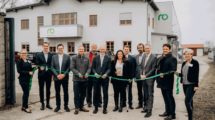


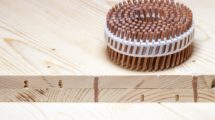

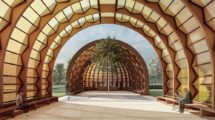





US giant Meta - the company behind Facebook, Instagram and WhatsApp - launches first large-scale program to use solid industrialized wood in the construction of its data centers, showing confidence that wood can support the technological infrastructure of the future.
The challenge: Carbon neutrality by 2030
Meta has set itself an ambitious goal of achieving carbon neutrality across the entire value chain by 2030. For a company that operates hundreds of data centers worldwide, this commitment means completely rethinking the building materials used.
"Embedded carbon" - the emissions associated with the production, transportation and installation of building materials - is a significant part of any data center's carbon footprint. This is where industrialized wood comes in as a surprising but logical solution.
For unfamiliar readers, embodied carbon refers to all CO2 emissions generated during the life cycle of a material - from raw material extraction to final installation. Unlike operational carbon (energy consumed during use), embodied carbon is "embedded" in the material from the moment it is manufactured.
What solid industrialized wood means in practice
Industrialized wood is a category of wood products specifically designed for strength and durability in industrial construction. They have nothing in common with the traditional wooden frames of individual houses.
The main types of industrialized wood used in Meta constructions include:
Glulam - beams and columns created by gluing several layers of timber together, resulting in structural elements with superior strength to steel in the strength-to-weight ratio.
Cross laminated timber (CLT) - thick panels created by gluing together several layers of lumber laid perpendicular to each other, providing ideal bi-directional stiffness for walls and floors.
Solid plywood panels - alternatives to traditional concrete slabs for specific applications. If you want to better understand this material, LVL - veneer beams and panels for the construction of wooden houses and structures provides a detailed explanation of the manufacturing process.
These technologies have evolved significantly in recent years, and specialized CAD/CAM systems for industrialized wood now allow the design and manufacture of complex structures that rival steel and concrete. CADWORK software specifically designed for timber construction, for example, facilitates the complete 3D design of timber structures from planning to production.
First project: South Carolina leads the way
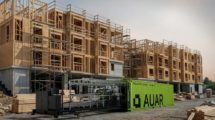
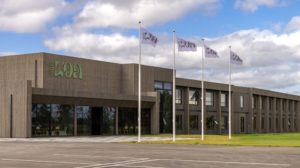
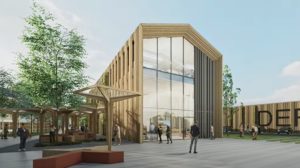
The first solid industrialized wood administrative building was erected at the Meta data center campus in Aiken, South Carolina, in collaboration with builder DPR and material supplier SmartLam. The project served as a test for the technical and economic viability of the solution.
The results have been encouraging enough for rapid expansion: by the end of the year, Meta will begin construction of similar facilities in Cheyenne, Wyoming (with Fortis Construction and Mercer Mass Timber) and Montgomery, Alabama (with Hensel Phelps and Binderholz).
Figures that talk: 41% emission reduction
The data presented by Meta is impressive: replacing traditional materials with industrialized wood in administrative buildings reduces embodied carbon by about 41%. This figure does not include the additional benefits generated by:
- Prefabrication - eliminating on-site welding reduces time and emissions
- Light weight - foundations can be reduced by up to 50%, reducing the amount of concrete
- Carbon storage - wood 'stores' carbon absorbed by the tree during growth
Industrialized wood's superior strength-to-weight ratio, combined with its natural fire-resistant properties, make it suitable for critical structural applications. Fire behavior of industrialized wood demonstrates that by forming the carbonization layer, it provides superior strength compared to metal structures that deform rapidly at high temperatures.
Sustainability in every detail
Meta leaves nothing to chance when it comes to sustainability. The company imposes independent audits to check:
- Full traceability - every piece of wood can be traced back to the forest of origin
- Responsible forest management - forests must be managed for long-term ecological health
- Social impact - Safe working conditions and fair wages for local communities
The wood comes from species commonly used in construction: Douglas, molid, pin and cedar. Where possible, reclaimed wood from demolitions is also used.
Unexpected benefits: from productivity to wellness
Bioprofile design research demonstrates that exposure to wood in the working environment has positive effects on occupants:
- Reducing stress
- Boost morale
- Increased productivity
- Promoting a general feeling of wellness
For Meta employees, these buildings will provide a healthier and more pleasant working environment.
Technical challenges and solutions
The use of industrialized wood in the data center environment raises specific technical questions:
Fire resistance: The density of solid wood and the natural formation of the carbonization layer provide superior strength compared to metal structures.
Humidity control: Modern air conditioning systems in data centers maintain optimal parameters that also protect industrialized wood.
Technical installations: Prefabrication allows the integration of cable ducts and HVAC systems right from the production phase. OSB boards, for example, play a crucial role in stiffening structures and can seamlessly integrate technical systems.
Impact on the timber industry
Meta's decision is a tremendous validation for the timber construction industry. The demand for data centers is growing exponentially globally - hundreds of such facilities are being built annually in the US alone.
If other tech companies follow Meta's lead, the industrialized wood market could see unprecedented expansion. This would boost:
- Investment in production technologies
- Developing specialized providers
- Innovations in products and processes
- Increasing certification capacities
The trend is clear: timber structures for public, industrial and agricultural buildings are constantly on the rise and advanced technologies are making ever taller and more complex constructions possible.
The future: from administrative buildings to server rooms
Meta doesn't stop at administrative buildings. The company plans to expand the use of industrialized wood to:
- Warehouses and ancillary facilities
- Technical rooms for equipment
- Even the critical server rooms that host the digital infrastructure
The latter would be an absolute first in the industry and could revolutionize the way we think about digital infrastructure. Height of wooden buildings is no longer a limitation, with concrete examples of buildings over 18 storeys already built around the world.
Lessons for Romanian industry
For Romanian timber companies, the Meta project offers valuable lessons:
Quality and certification are essential for access to large markets. Prefabrication capacity becomes a major competitive advantage - prefabricated or modular houses is already demonstrating these advantages in residential construction.
Working with architects and engineers specialized is crucial, and investing in technology will come back through access to big projects. High-performance equipment for timber frame house manufacturers are already available on the Romanian market.
Advanced technical insights
An interesting aspect is the integration of CAD/CAM technologies to realize these complex structures. Cadwork now enables precise manufacturing of complex items, eliminating human error and optimizing the production process.
Digitizing production provides a complete flow from design to machining, essential for projects of Meta's scale, where every element has to fit together perfectly.
Decisive structural advantages
A crucial issue for data centers is seismic behavior. Timber frame houses are more earthquake resistant than concrete or brick, due to their elasticity and low weight. For critical infrastructure such as data centers, this characteristic can be decisive.
Also, sound insulation is no longer a problem for modern industrialized wood construction, demolishing a persistent myth in the collective mentality.
Conclusion: wood as the foundation of the digital future
The Meta initiative marks the moment when the technology industry recognizes that sustainability is not just a "nice to have" but a strategic necessity. The choice of industrialized wood for its critical infrastructure demonstrates that traditional materials, enhanced by modern engineering, can support 21st century technology.
For the timber industry, this is more than just a business opportunity - it is confirmation that timber is not just a thing of the past, but will play a central role in building a sustainable future.
Over the next few years, we will be keeping a close eye on the evolution of this project and its impact on the industry as a whole. The Meta experience could pave the way for a new generation of digital infrastructure, built from mankind's oldest building material, reinterpreted for the needs of the modern world.






 Română
  Italiano
  English
  Deutsch
  Español
  Français
  Polski
  Português (AO90)
Add comment