













O LinkedIn post about recent acquisitions hides a deeper change: the woodworking machinery industry no longer sells machines—it builds integrated capabilities.
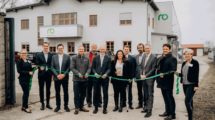
The 11th post in the WEINIG Group's “12 Days of WEINIGmas” campaign recaps a series of transactions that, at first glance, appear to be simple portfolio expansions: ESSETRE and H.I.T. Maschinenbau in 2023, Stähle Hess grinding technology in 2024.
We see a recurring pattern throughout the machinery industry: companies no longer buy to add products to their catalog—they buy to fill skill gaps. ESSETRE brings expertise in wood construction, H.I.T. Maschinenbau brings automation capabilities, and Stähle Hess completes the finishing side. This is not diversification—it is the deliberate construction of end-to-end solutions.
From standalone to integrated
The pressure comes from customers who no longer want to juggle between different suppliers for each stage of production. They want integration. And either the supplier (such as WEINIG) will do this, or someone else will—AI or another technical solution that connects the machines in a functional ecosystem. In the second scenario, the equipment supplier leaves serious money on the table: someone will still profit from integration, whether it's the machine manufacturer or a third party that provides the software layer.
Strategic acquisitions thus become not just an option for growth, but an economic necessity. You buy when it helps you sell, when the market is looking for such solutions, and when the alternative means giving up part of the added value to someone else.
But the pressure for integration is so great that the industry is responding in other ways.
When competitors cooperate: the ETML case
Officially presented at LIGNA 2025 ETML (European Tool-Machine Language), a standard that enables barrier-free communication between tools, machines, and software platforms from different manufacturers. What makes ETML truly remarkable is not the technology itself—it's who's behind it.
The list of companies that developed the standard includes: Ake, Biesse, Jso, Ima Schelling, Kohnle, Holz-Her, Homag, Leitz, Leuco, SCM, and Weinig. Exactly. The same companies that are fighting for the largest possible market share through strategic acquisitions are collaborating to create the common infrastructure that makes integration possible.
The Smart Cloud platform at the heart of ETML enables data to flow freely and securely throughout the entire tool life cycle—from setup to resharpening—regardless of machine brand. Setup is 3-5 times faster, costly errors are eliminated, and transition between different machine brands in the same factory is simple.
Two responses to the same pressure
The industry is responding to the challenge of integration on two fronts simultaneously:
Through acquisitions – WEINIG acquires H.I.T. Maschinenbau for automation, SCM acquires Tecno Logica for furniture. Each builds its own vertical ecosystem, controlling the entire technology stack.
Through collaboration – the same companies are creating ETML, a common standard that enables horizontal interoperability between different ecosystems.
It's not contradictory. It's complementary. Acquisitions give you a competitive advantage through unique capabilities. Common standards reduce your integration costs and broaden your addressable market—a customer can combine machines from different suppliers without sacrificing efficiency.
But the urgency is palpable. Asian manufacturers are putting enormous pressure on prices, forcing European players to differentiate themselves through something that cannot be copied immediately: deep integration, real automation, complete ecosystems. It is no longer enough to make a good car at a good price. You have to offer the complete solution, now.
The pattern repeats itself
SCM Group follows the same logic. “For us, 2024 was the year of strategic acquisitions,” Pietro Gheller told us, Director of the Wood Division – SCM Group, in a recent interview at Ligna 2025. Tecno Logica, acquired in July 2024, specializes in solutions for the furniture industry.
The second acquisition, Mecal Machinery in December 2024, opens up new horizons: “It is an Italian company specializing in joinery and aluminum profile processing. Basically, it greatly strengthens our commercial offering and makes the SCM group increasingly diversified and powerful.”
The same pattern: acquisitions that complement capabilities, not just products. Tecno Logica for furniture, Mecal for joinery and aluminum – SCM builds ecosystems for specific market segments.
What this means for the rest of the industry
Consolidation is accelerating. Medium-sized equipment companies face a choice: either become integrated solution providers themselves through acquisitions, or become acquisition targets for those building ecosystems. There is also the option of integrating their products and systems very well into ETML.
And AI will dramatically accelerate this process. As artificial intelligence becomes better at optimizing production flows and communication between equipment, the gap between “good machine suppliers” and “integrated ecosystem suppliers” will widen exponentially. Those who don't take the plunge now risk becoming irrelevant very quickly.
The end customer—the furniture factory, the wooden house manufacturer, the industrial processor—no longer compares “machine X vs. machine Y.” They compare “ecosystem A vs. ecosystem B.” Who can integrate better? Who has expertise across the entire flow? Who offers real automation, not just automated equipment?
The question remains
The strategy is clear. The execution—we will see in the coming years. An acquisition looks good in a press release. Real integration, which offers the customer concrete value and not just a broader product portfolio—that is something else entirely.
The same goes for ETML—a common standard looks good on paper. Implementing it in hundreds of existing factories, with old equipment that doesn't speak the new language, with processes established for years—that's the hard part.
The teaser for the “final part” of the WEINIGmas campaign suggests that there is one more piece of the puzzle. Either an acquisition that completes the value chain or a strategic partnership that validates the entire approach.
What is certain is that the industry is reconfiguring itself around players who can think in terms of ecosystems, not individual equipment. WEINIG and SCM are betting on this through acquisitions. ETML is betting on collaboration. Probably, the winners will be those who do both simultaneously.






 Română
  Italiano
  English
  Deutsch
  Español
  Français
  Polski
  Português (AO90)
Add comment