
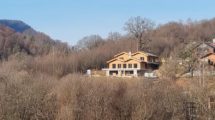







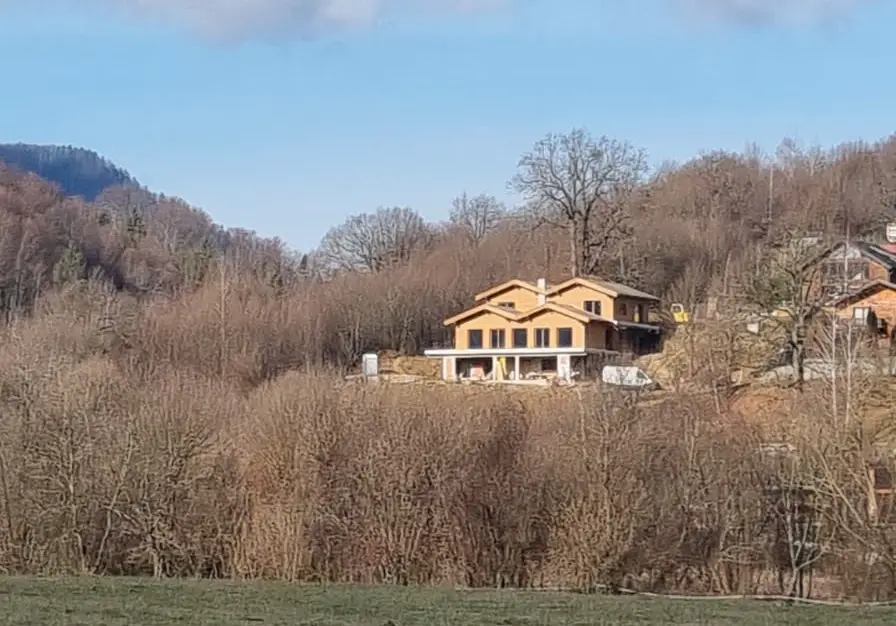
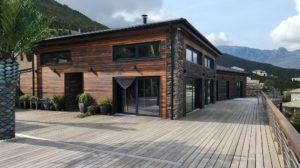
In construction, some projects are memorable not just for their size or architecture, but for the way they manage to sit naturally in a place. They are those buildings that seem to have always existed in the landscape, even if they are the result of complex technical processes and carefully considered decisions. The chalet by Dorna Eco House in Râșnov, Brasov County, is one such project. From the first sketches to the final details of execution, every stage has pursued the same goal: an energy-efficient, responsibly built dwelling integrated into a truly special mountain setting. I chose to call it a chalet because it is more than a chalet. The size, the generous use of wood inside and out, and the integration into the landscape are reminiscent of the kind of buildings you are delighted to discover in the French or Swiss Alps.
A project designed for place and landscape
The basic idea for Dorna Eco House was very clear from the very beginning - the use of natural materials and the creation of an authentic space, in harmony with the environment and the lifestyle desired by the beneficiaries. But what seemed like a simple concept became, in reality, a complex technical design, shaped by the particularities of the site and the structural demands.
Located in a spectacular mountainous area of Râșnov, the chalet was conceived as a generously sized dwelling, but carefully calibrated so as not to dominate the landscape. Integration into the natural environment was a key direction, and the construction solutions were chosen to respect both the character of the site and current energy efficiency requirements.
Natural materials were prioritized not only for aesthetic but also for functional reasons. Wood plays the central role, both in the structure and in the finishes, contributing to the interior comfort and overall performance of the building.
The first real challenge - difficult logistics
Every project starts with the terrain, and in this case, the terrain imposed clear rules. The steep slope made it impossible for a truck to directly access the site, which created a major logistical challenge right from the organization phase.
An intermediate unloading was necessary, followed by a staged transportation of the elements to the site. At the same time, the lack of access for traditional assembly machines meant that many operations had to be adapted or rethought in real time.
These conditions required not only planning and a great deal of flexibility, but above all the ability to take quick and correct decisions directly on the ground.
Working together to make a difference
In such contexts, it is the team that makes the difference, as well as the relationship built correctly and carefully with the beneficiaries. In the case of this project, the collaboration has been active and constant, with the beneficiaries involved in finding solutions for each difficult stage.
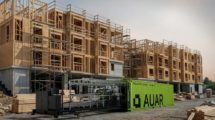
This efficient communication allowed the timber frame construction system with prefabricated walls to be maximized. The elements were produced under controlled conditions in the Dorna Eco House factory, which reduced site uncertainties and ensured consistent quality of workmanship.
Even under complicated logistical conditions, the assembly could be carried out with precision, thanks to rigorous preparation during the production phase.
Architecture that creates identity
One of the defining elements of the project is the architectural solution that suggests the existence of two distinct, attached volumes. This approach generated a dynamic volumetric composition and provided freedom in the organization of the interior spaces.
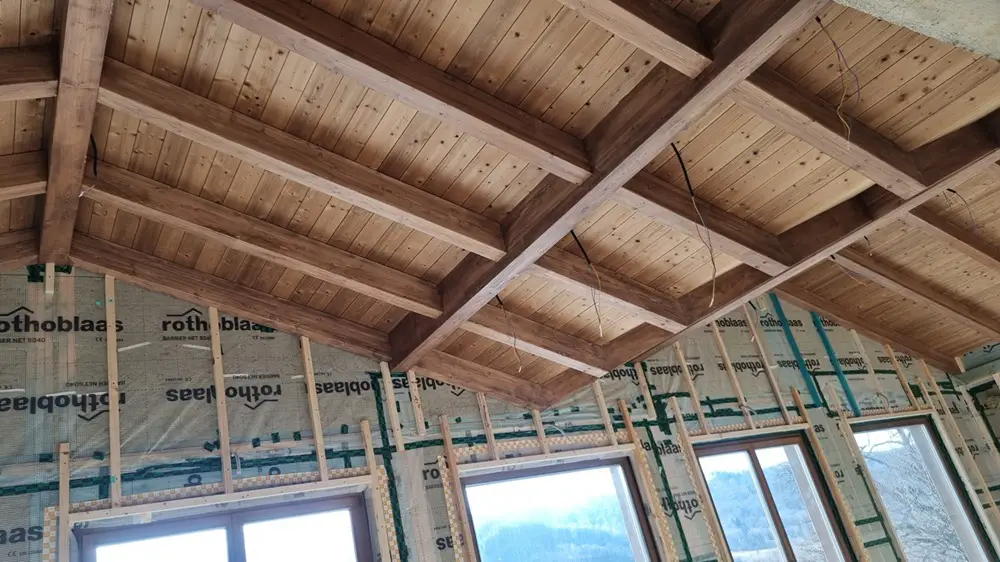
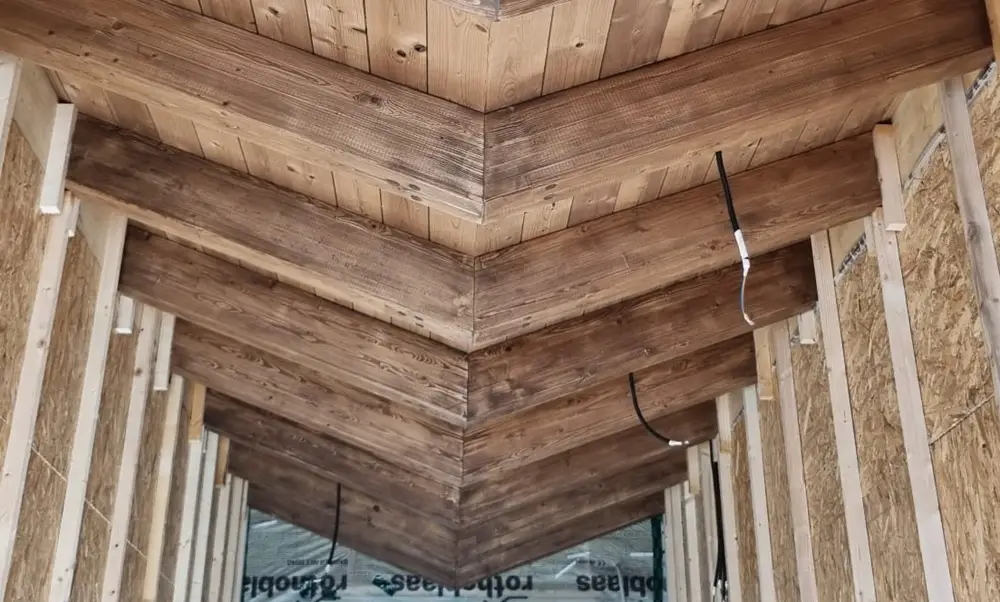
At the same time, it has created the ideal backdrop for highlighting the roof with its apparent trusses - an element that brings not only aesthetic value but also authenticity.
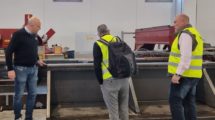
The processing of the headers in the Dorna Eco House factory, on CNC machines, allowed for precise joints and details that, once installed, become an integral part of the interior design. The structure is no longer hidden but exposed and enhanced.
The uncompromising roof
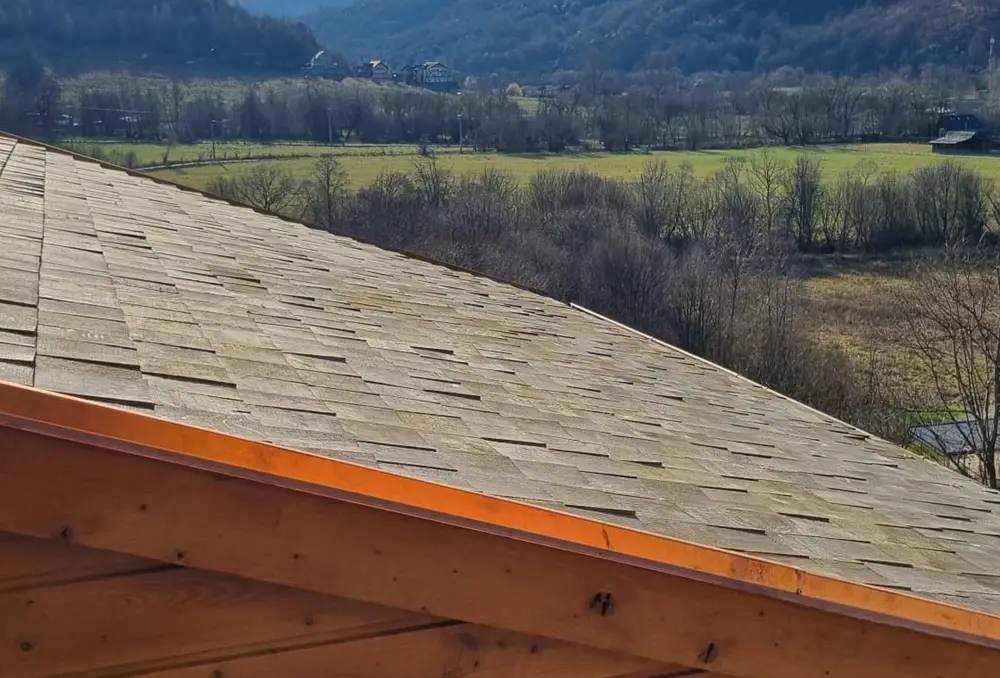
The roof was undoubtedly one of the most complex technical challenges. That is the conclusion the Dorna Eco House team has now come to, looking back and evaluating the project.
The volumetric configuration generated a central doline, which, on the inside, resulted in a complicated intersection of trusses. Each element had to be executed with millimetric precision, the trusses being machined with chamfers at both ends to meet perfectly at the set points.
At the same time, the angled ceiling paneling added an extra level of difficulty. The execution required coordination, attention to detail and a very good understanding of the project as a whole.
But the end result confirms the advantages of a precise production capacity with state-of-the-art equipment and an experienced team capable of handling complex structures in real site conditions.
Natural materials and long-term performance
Beyond the structural challenges, the project constantly sought to ensure the comfort of the inhabitants and achieve high energy performance without compromising the use of natural materials.
The roof has been insulated with about 40 cm of basaltic wool, providing a high level of thermal protection. For acoustic comfort, 4 mm sound insulating membranes were installed between the bedrooms, contributing to the creation of intimate and sound-protected spaces.
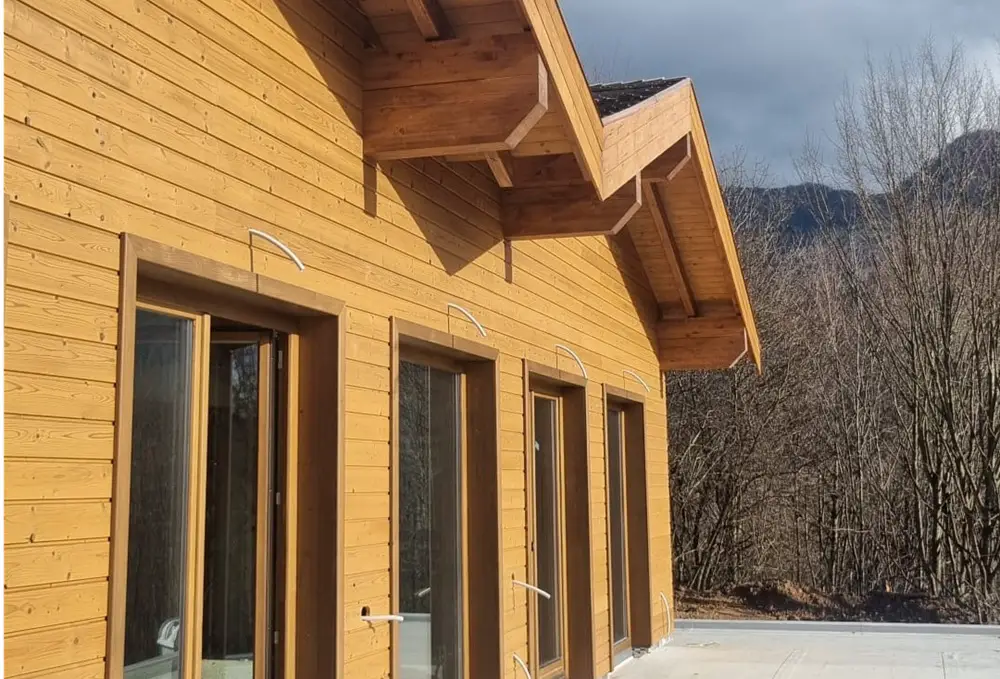
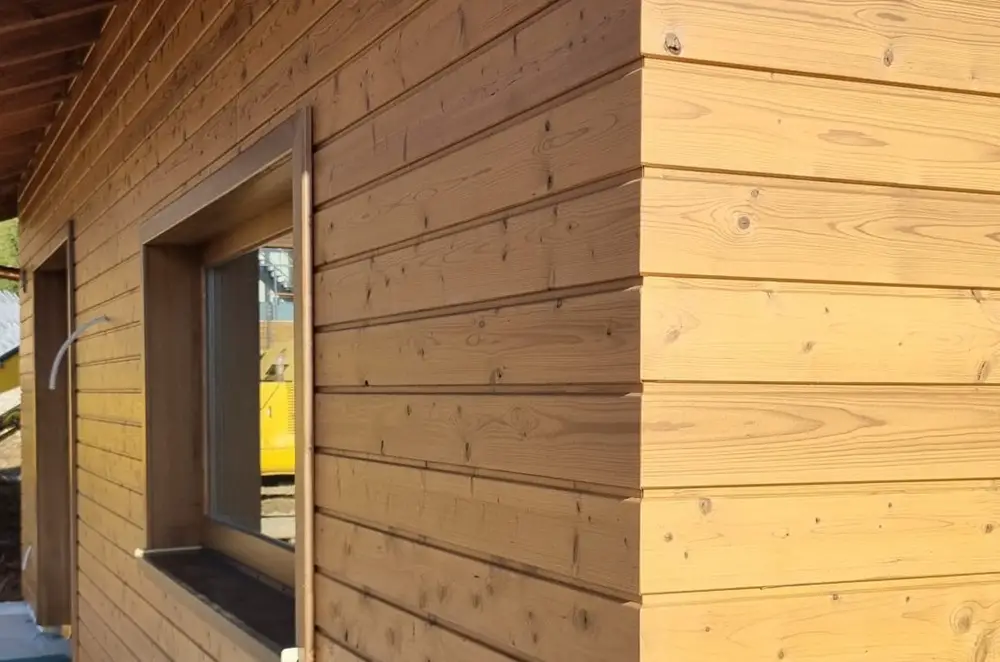
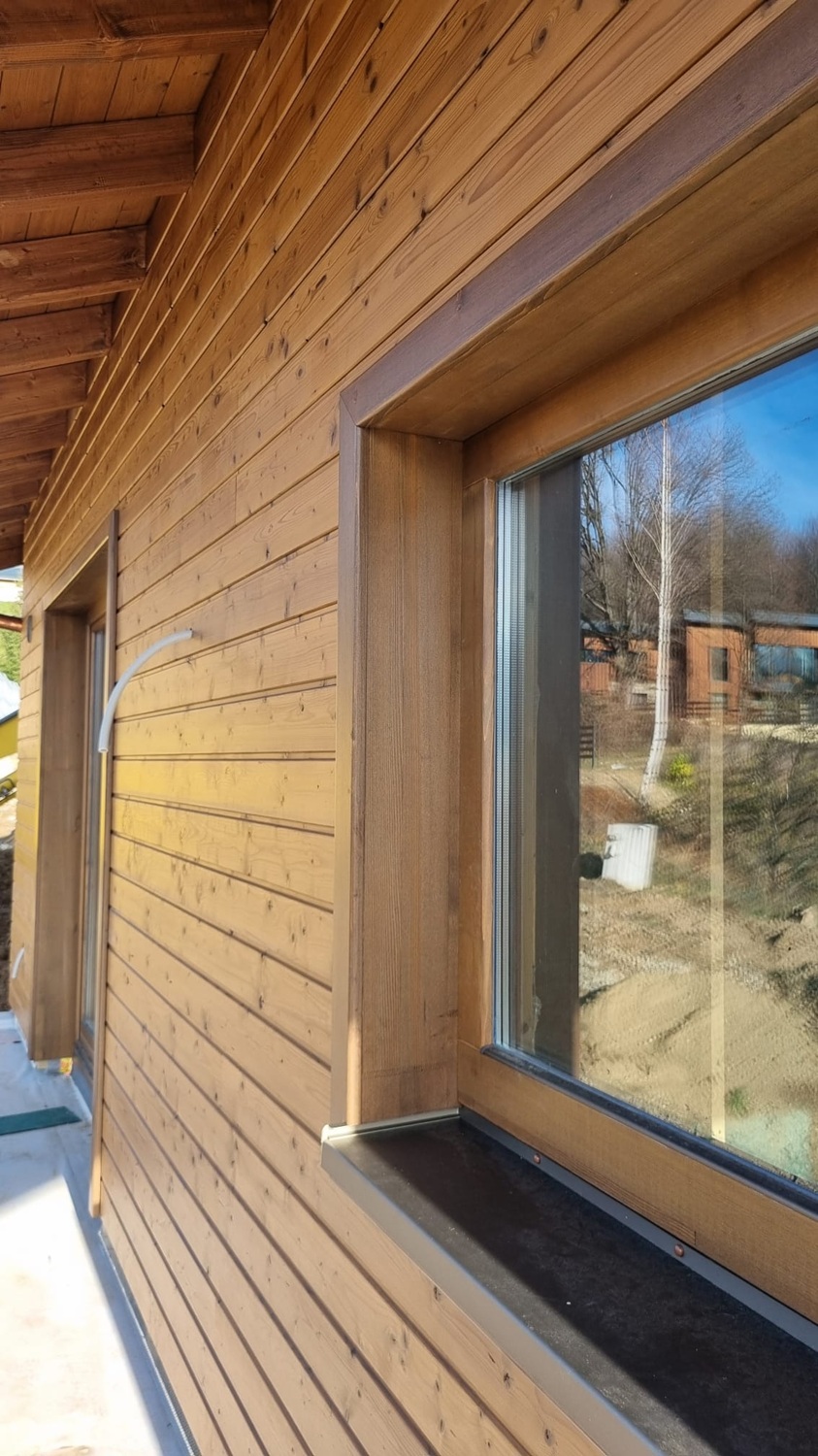
The ventilated facade, insulated with high-density basalt wool, is clad with heat-treated pine. The installation without masking battens at the corners emphasizes the precision of the workmanship and the quality of the finish.
The wooden joinery and the shingle roof complement the overall concept coherently, contributing both to the aesthetics of the project and to its natural integration into the landscape.
The team - invisible but essential
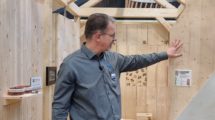
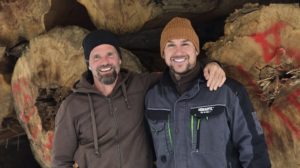
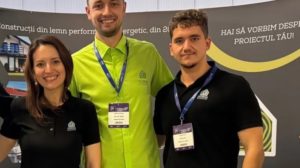
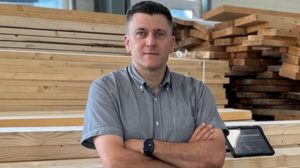
Watching the project unfold we discover that behind every step - from idea and design to production and installation - is a small but experienced team. Over time, Dorna Eco House has built a way of working based on specialization and rigor. The teams are made up of professionals who have participated in the realization of many projects in Europe and in the country, technicians who understand each stage of the execution of a wooden house and put it into practice with attention to detail.
This continuity between design and installation reduces errors and allows rapid adaptation to unforeseen situations in the field.
More than a project - a lesson in adaptation
The chalet in Râșnov demonstrates that the construction of a house is not only about production and assembly, but also about the ability to adapt the technical solutions of the project to the reality on the ground. It is an example of the balance between architecture, technology and nature - a project in which every decision, from material to execution detail, contributes to a coherent and sustainable result. Because it was not just about a construction, but a process where experience, collaboration and respect for context made the difference.




 Română
  Italiano
  English
  Deutsch
  Español
  Français
  Polski
  Português (AO90)
Add comment