

















Log houses are spectacular and for many of us a dream. I have to admit that it has been my dream for a long time, ever since I saw a log house in a forest in a magazine. Lately, thanks to my fact-finding visits, I have had the opportunity to see how they are made, and the impression is even stronger. It is interesting to see what is involved in building a log house, how much work and time goes into it and what needs to be taken into account for a solid and quality construction.
Log houses. Types of log houses
Tree trunk houses have been made for thousands of years, wood being one of the oldest building materials, along with stone and clay. This type of house is specific to areas with extensive coniferous forests, such as the Scandinavian Peninsula, Russia, Canada, the United States. Why conifers? Because they have straight trunks that can be used without too much work when building walls.
Tree trunks have also been used to build houses in our country in areas with rich coniferous forests, except that in our country traditional wooden houses are made of square beams. Such houses can still be seen in the northern part of the country - in Bucovina and Maramureș - but also on the Trotuș Valley or in the high area of Sibiu, where old stâne still shelter tired tourists.
Round wooden houses are not specific to our country, being "imported" from North America and Canada. Interestingly, we didn't get them from Russia or the Scandinavian Peninsula, which are much closer, but from America, where they were also "taken" by Russians and Scandinavians.
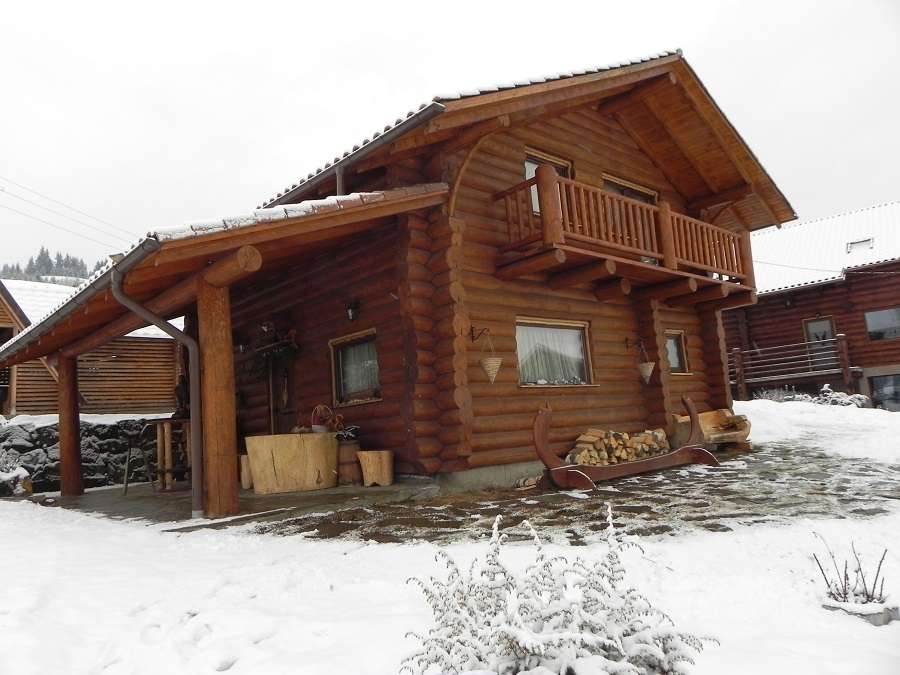
Log houses can be made from unhewn wood, i.e. the tree trunk has been debarked without further processing, or from hewn wood. In the first case they are typical log houses, with each log different from the other, made like in the past. The calibrated log houses are those made of logs of equal size, turned in special machines to the same diameter. They have a uniform, less spectacular appearance.
How to build log houses
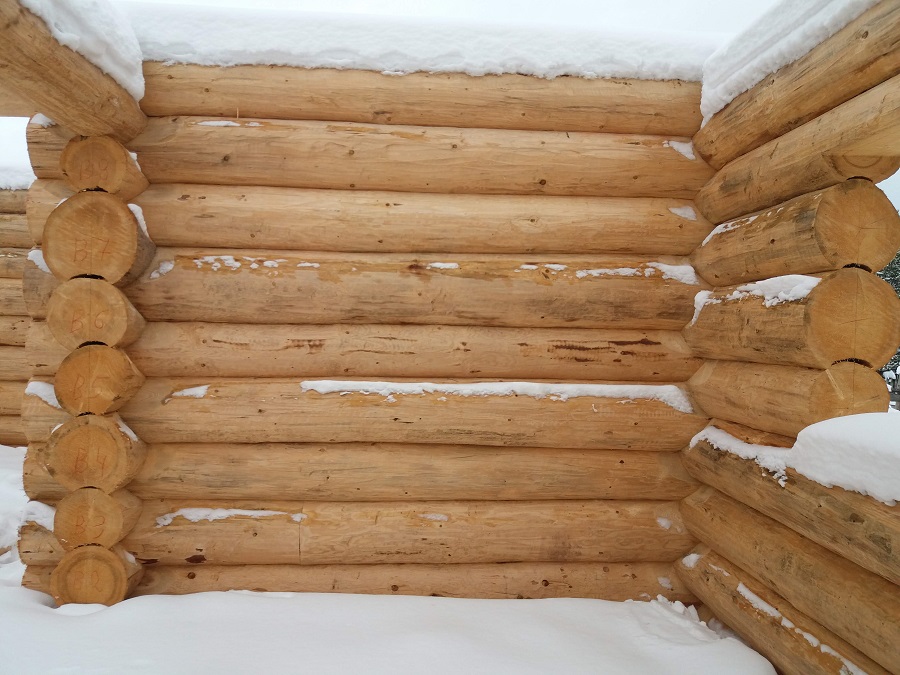
By overlapping the peeled and processed logs to fit together at the ends to form the corners of the house. The processing is very important and depends on the strength of the construction and the degree of insulation from the outside. They are done by hand, using a compass and drujbei or with the help of CNCs, in specialized factories. The vast majority of Romanian producers work in the traditional way, doing the machining and joining by hand, by chertare (woodworking, notching, in order to join it to another piece).
It all starts with felling the trees outside the growing season, i.e. end of November - beginning of February, so that the wood contains as little water as possible. The lower the moisture content, the faster the wood dries and the fewer cracks and warps.
Drying occurs naturally which is why it takes longer. That's why the working time for log houses is longer, with manufacturers talking about 1-1.5 years until the red house (without doors and windows) is installed on the customer's land. Drying time is very important, and rushing the manufacturer doesn't help - in fact, it spoils. If the wood is not left as long as necessary to get rid of excess moisture, it does not stop but continues the process when it is part of the house. The changes will be much greater and problems like gaps between logs or sagging ceilings will occur.
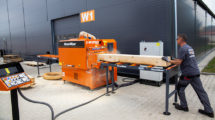
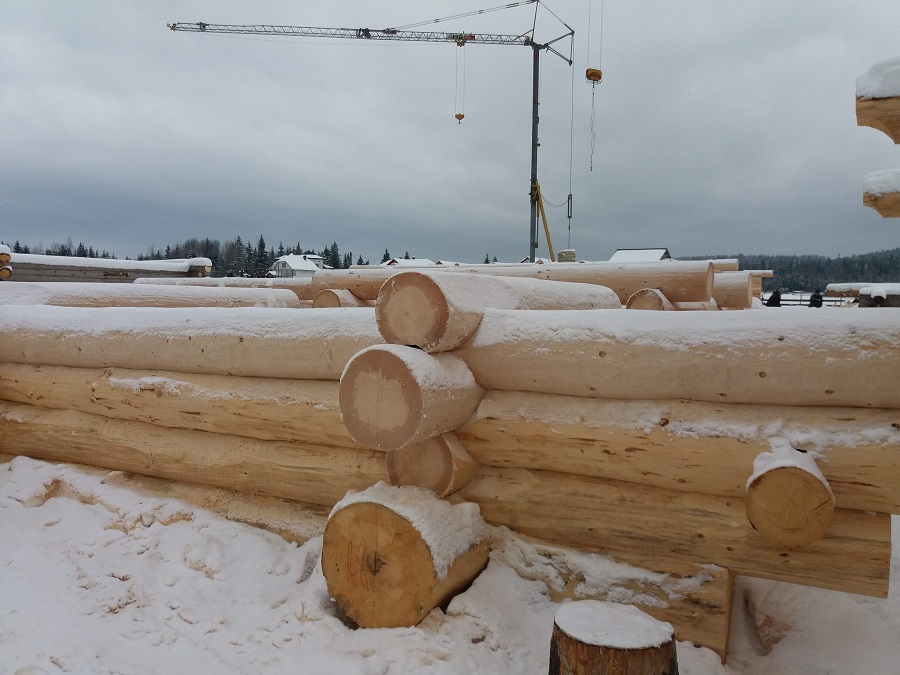
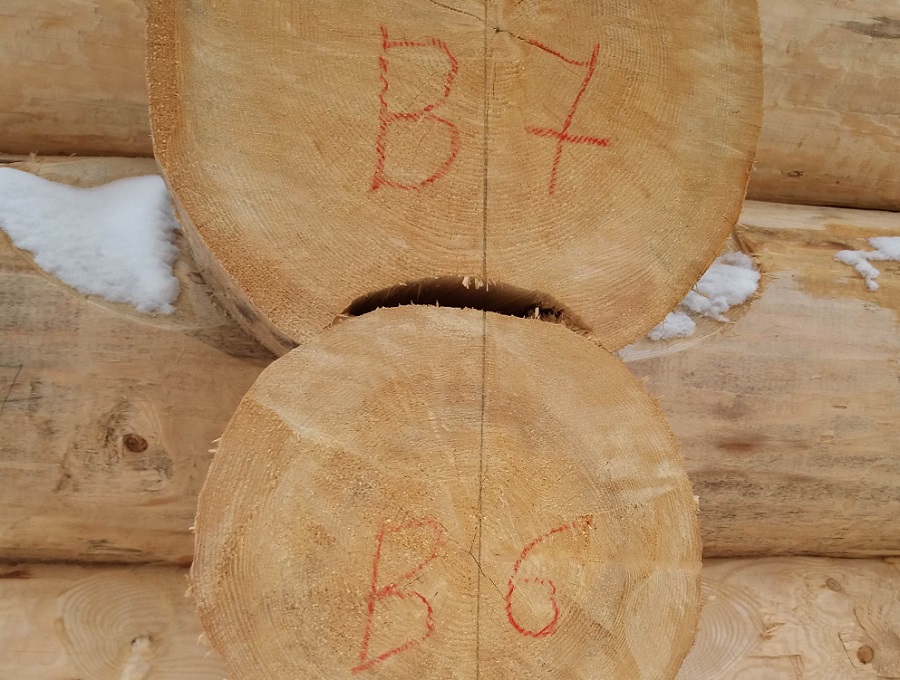
The logs are shelled by hand, using round knives or steam. In the first case, the appearance is natural, the knife notches giving a very authentic look. When using steam, the wood is smooth and even. After cleaning, the joinings are processed. The logs are processed as the house goes up. The process takes place at the manufacturer's premises, where the house is first made. I say first time because the house is built twice, once at the builder's and a second time at the recipient. After all the logs are joined together, the house is left for a while to settle, then the logs are numbered and labeled, the house is unpacked, loaded into cars and transported to the beneficiary's land where it is rebuilt.
Types of joints for making house corners
Corner joints for log houses come in several types: Norwegian (Scandinavian), Canadian, corner, etc. Their choice depends on their aesthetic appearance, cost, durability and water resistance. In our country, we mainly use the Canadian and Norwegian types. In factCanadian mBining is an improvement on the classic Norwegian one. The improvement was made by Canadian log home builder Del Radomske, a well-known teacher and innovator in the field. He made a cut in the log to allow the logs to settle and compact as they dry and the construction is being trimmed. The cut along the log also prevents it from bending. The joint is designed to become much tighter and stronger as time passes and the wood dries and reduces in size. For this reason it has come to be known and used in many parts of the world.
When the house is fitted to the customer, a cheder is fitted in the cut along the log to keep out air and moisture (as with windows) and insulation is fitted inside. Generally, sheep's wool insulation is used to make it as natural as possible, but it is not the only insulation that can be used.
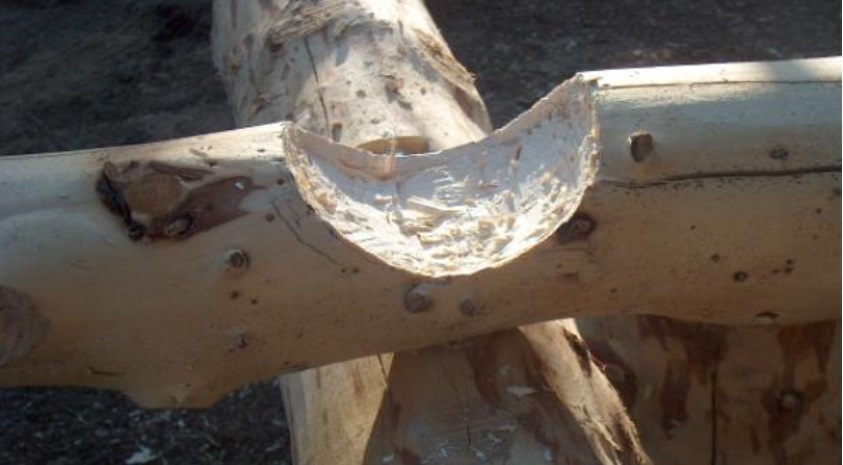
The Norwegian or Scandinavian combinationThe cut, as it is also called, is a round cut made in the top log that fits snugly into the log below it. A measuring tool called a compass and saw is used to make this cut. When a 2-3 cm adjustment is needed for a perfect fit, the wood is sanded. The joint is not very precisely defined in shape and size, and variations on the same theme can be made 🙂 But the principle is the same.
Another îThe corner is used in log houses. It is made using logs placed vertically on the corners and into which the processed ends of the horizontal logs enter, thus forming the wall. The processing is similar to that for the butt and socket joint. I haven't found any Romanian manufacturers who make such joints in the houses they build.
Heaping the logs - setting up the house
The most important issue to bear in mind when making a log house, but also when owning one, is tasing. It occurs due to the dimensional shrinkage of the wood through loss of moisture and the logs' own weight. This is why the house must be left to settle for a while.
Moisture loss is natural and occurs as soon as the tree is cut down. Water escapes until equilibrium is reached with the humidity of the surrounding environment. This means that if a log house that has reached equilibrium in an area with a certain relative humidity is moved to an area with a different relative humidity, it will begin to settle again until equilibrium is restored. Experts say that it takes 3-5 years for the wood to reach equilibrium humidity, the time being different from species to species. During all this time, cracks appear in the wood and its size decreases.
Due to the laying of the wood fiber along the length of the tree, the dimensional decrease is significant in the radial direction, resulting in a decrease in the circumference of the log, but negligible in the longitudinal direction (along the log). The dimensional shrinkage causes the logs to settle and the house to settle. The settlement can be as much as 5% of the original height of the house. When the house is not well made, cracks can appear in window frames, doors stop closing, the height of stair treads becomes uneven, or the ceiling can sag.
That's why the house needs to sit for a period at the manufacturer without doors and windows fitted. Experts say this period should be between 6 and 12 months. To shorten the period, threaded rods can be fitted to the walls to force the settling. If the rods have springs, tightening is automatic. If not, manual tightening is needed every 5-7 days. With rods the waiting time is reduced to 3-6 months.
It does not mean that after this time the house will stop working, only that it has largely settled down and further movements are much reduced. That is why log houses need different construction solutions compared to ordinary houses:
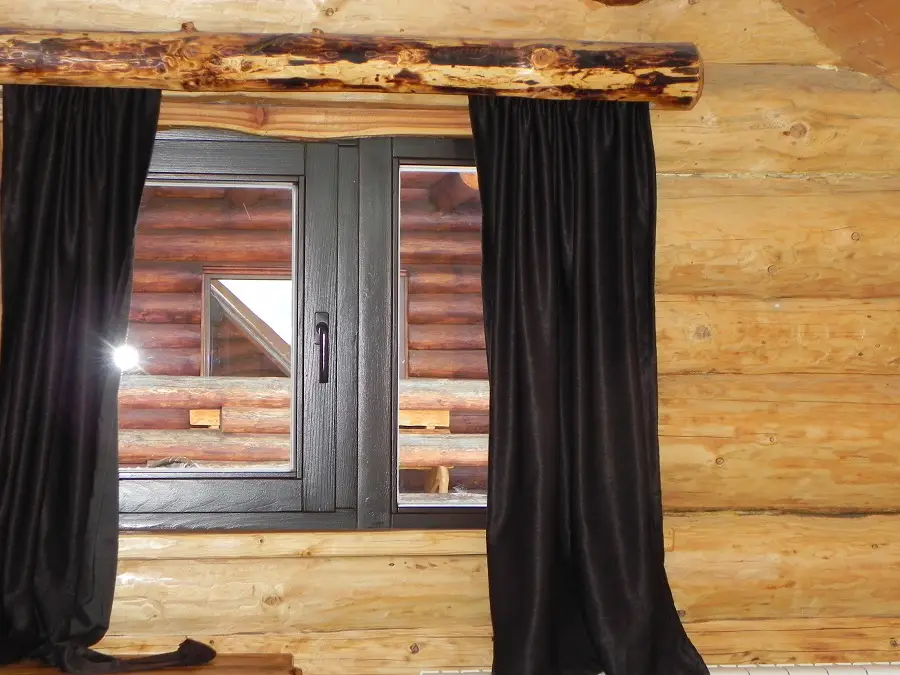
- joints above windows and doors so that the log is not in direct contact with the window frame or door frame
- windows should be fitted by specialized companies that have systems that allow for possible subsidence
- in the case of houses with an attic or first floor and larger open spaces, it is advisable to install skylights on the ground floor to prevent the ceilings from sagging
- if bathroom or kitchen walls are tiled, the tiles should be laid on plasterboard walls separated from the wooden wall and with a cavity left at the top.
Advantages of a log house
A well-crafted log house will keep you out of trouble, so you can enjoy the warm and pleasant look of wood. As well as known advantages of a wooden house, the log one comes with pluses:
- It is the strongest type of house thanks to its very strong corner joints. They say that in such a house, if you are not welcome, you can only enter if you have a chainsaw. If a bulldozer tries to knock it down by pushing it, it will only succeed in moving it, not in knocking it down.
- It is the most earthquake-resistant type of construction considered to stand up to earthquakes of 8.5 on the Richter scale.
- Indoor air is always very pleasant due to the permanent exchange of moisture between the wood and the air inside.
- It's not hard to heat and the warmth is persistent long after the heat source is turned off.
- Thanks to its pleasant appearance does not need any special finishes, neither outside nor inside. Protection with oil on the inside and pigmented oil or lacquer on the outside is sufficient.
I was in such a house in Vatra Dornei and learned what thermal comfort means in a well-made log house. The house had been unheated for 2 weeks, during which time the outside temperature had frequently dropped below -10ºC at night. The house was 13-14ºC according to the thermometer, but you didn't feel cold. The moisture exchange between the wood and the air made for a pleasant, far from "freezing" atmosphere inside. The house was on the tourist circuit and the owner lived next door, also in a log house. The house was from 2011 and he had nothing but praise for the comfort inside.
There are log house manufacturers in Romania working for both domestic and foreign customers. If you have any questions or concerns about log houses leave them below in the dedicated area. I will answer you for sure.








 Română
  Italiano
  English
  Deutsch
  Español
  Français
  Polski
  Português (AO90)
How much does a solid wood house cost?
[...] Joining and finger-jointing of wood in log houses [...]
Good evening, we bought 6 months ago a log house in Fălticeni, Suceava County, our questions would be about solutions for thermal insulation (we used natural wool between the logs), how can we protect / treat the wool outside?
The second would be in relation to the space upstairs between the ceiling and the logs, which is due to the wood drying out when we turned on the heating, what solutions would be to fill the spaces?
Thank you very much for your help.
Hello!
Unfortunately, it's not a simple problem that anyone can solve. You should ask the person you bought the house from for help. Before the logs are assembled, they are processed and the lengths are cut. As they dry, the house is sheared and the wool is trapped inside ensuring watertightness. If the bindings are not done correctly, gaps appear between the logs when the logs are pressed (you can see them out) and the wool doesn't help much. In addition, the decay continues for 2-5 years and even if you apply plaster or clay to the wool, it will crack and the gaps will reappear. The same goes for the upstairs space.
My advice is to contact the manufacturer you purchased from or another log home manufacturer to provide you with a future-proof solution.